

Choosing the right window treatments for your home comes down to balancing three key factors: light control, aesthetic style, and thermal insulation.
While both cellular (honeycomb) shades and roller shades offer sleek profiles and customizable options, they perform fundamentally differently—especially when facing Northern Alberta’s extreme temperature swings and extended summer daylight.
Cellular vs. Roller Shades: The Short Answer
Choose Cellular Shades if your primary goal is lower heating and cooling bills, draft reduction, sound absorption, or maximum insulation for bedrooms and cold-facing windows.
Choose Roller Shades if you prioritize sleek, modern design, wide pattern/fabric selections, low-maintenance cleaning, or unobstructed view-through during the day.
Key Takeaways
Thermal Insulation: Cellular shades feature a unique honeycomb pocket that traps air, reducing winter heat loss through glass by up to 40% and drastically lowering energy bills.
Aesthetic Flexibility: Roller shades sit flush against window frames and offer hundreds of fabric, texture, and opacity choices, making them the go-to for modern and minimalist interior designs.
Northern Alberta Performance: Roller shades excel at managing prolonged summer daylight with blackout weaves, while cellular shades act as a thermal barrier against severe winter freezes.
Room-by-Room Strategy: You don’t have to choose just one—mixing cellular shades in bedrooms/basements with roller shades in main living areas is the most cost-effective approach.
How Cellular Shades and Roller Shades Affect Energy Bills
To understand how window treatments impact your monthly energy bills, you first need to understand how glass transfers heat. Windows account for up to 25%–30% of residential heating and cooling energy use through conduction and thermal radiation.
In regions like Northern Alberta, where temperatures fluctuate from -30°C in winter to +30°C in summer, untreated glass forces your HVAC system to work overtime.
| Feature | Cellular Shades (Thermal Trap) | Roller Shades (Solar Barrier) |
|---|---|---|
| Primary Mechanism | Traps air inside honeycomb cells | Reflects and filters solar radiation |
| Outdoor Element Targeted | Cold winter drafts & heat loss | Direct summer solar glare & UV rays |
| Indoor Result | Stabilizes indoor air temperature | Prevents room overheating |
| Energy Impact | Reduces heating gas consumption by 15%–22% | Reduces AC runtime by dropping temps 3°C–6°C |
Cellular Shades: The Insulation Powerhouse
Cellular shades derive their insulating performance from their geometry. When viewed from the side, the fabric forms a series of honeycomb cells.
When you lower the shade, these cells expand and trap air against the pane. Because trapped air is a poor conductor of heat, it creates an insulating air pocket between your room and the cold glass.
Winter Impact (Conduction Loss): A single-pane or older double-pane window loses significant interior heat via conduction. Double-cell honeycomb shades can increase the overall R-value of a window from roughly R-2.0 to R-4.5 or higher.
Practical Example: In a typical 2,000 sq. ft. two-story home in Grande Prairie during a cold spell (-25°C), cold drafts near windows force thermostats to cycle continuously. Installing double-cell blackout honeycomb shades across cold-facing northern and eastern windows creates a thermal barrier that reduces draft-related heat loss, cutting gas furnace consumption by 15% to 22% during peak winter months.
Summer Impact (Solar Heat Gain): In the summer, cellular shades prevent heat from penetrating inward. Top-down/bottom-up cellular shades allow you to cover the lower half of the glass—blocking ambient pavement and yard heat—while leaving the top open for natural daylighting.
Roller Shades: Managing Solar Heat Gain
Roller shades consist of a single continuous sheet of fabric wrapped around a rotating casing or tube. Standard roller shades do not create a trapped air pocket, meaning their static R-value is lower than that of honeycomb shades. However, they excel at controlling Solar Heat Gain Coefficient (SHGC).
Summer Impact (Radiant Heat Reflection): Light-colored or reflective solar roller shades bounce ultraviolet and infrared rays back outside before they transform into ambient room heat.
Practical Example: A south-facing living room with large picture windows acts like a greenhouse on hot July afternoons. A solar roller shade with a 3% or 5% openness factor filters incoming radiation while maintaining your view of the outdoors. By lowering these shades during peak afternoon sun, indoor ambient temperatures can drop by 3°C to 6°C, significantly reducing the run-time on central air conditioners or portable cooling units.
Pros and Cons at a Glance
Cellular Shades
| Pros | Cons |
|---|---|
|
|
Roller Shades
| Pros | Cons |
|---|---|
|
|
Best Choice by Room Type
| Room Type | Recommended Choice | Primary Reason |
|---|---|---|
| Bedrooms | Cellular Shades (Blackout) | Traps cold glass drafts and provides maximum room darkening for quality sleep. |
| Nurseries | Cellular Shades (Cordless/Motorized) | Offers sound absorption for street noise and certified child-safe cordless operation. |
| Dining Rooms | Roller Shades (Light-Filtering) | Provides a sleek profile that pairs elegantly under decorative drapery side panels. |
| Living Rooms / Sunrooms | Roller Shades (Solar 3%–5%) | Cuts intense sun glare and blocks 95%+ of damaging UV rays while keeping view-through intact. |
| Bathrooms | Roller Shades (Moisture-Resistant) | Sleek vinyl/synthetic fabrics resist humidity and can be wiped clean without trapping moisture. |
| Basements | Cellular Shades | Counteracts cold basement window frames by adding a heavy thermal insulation layer. |
| Patio / Sliding Doors | Panel Tracks or Vertical Cellular | Glides smoothly side-to-side along high-traffic patio doorways. |
| Home Offices | Roller Shades (Solar or Dual) | Eliminates monitor screen reflections while maintaining pleasant, natural work lighting. |
Best Choice by Home Style
Matching window treatments to your home’s architectural details keeps the look cohesive across every room.
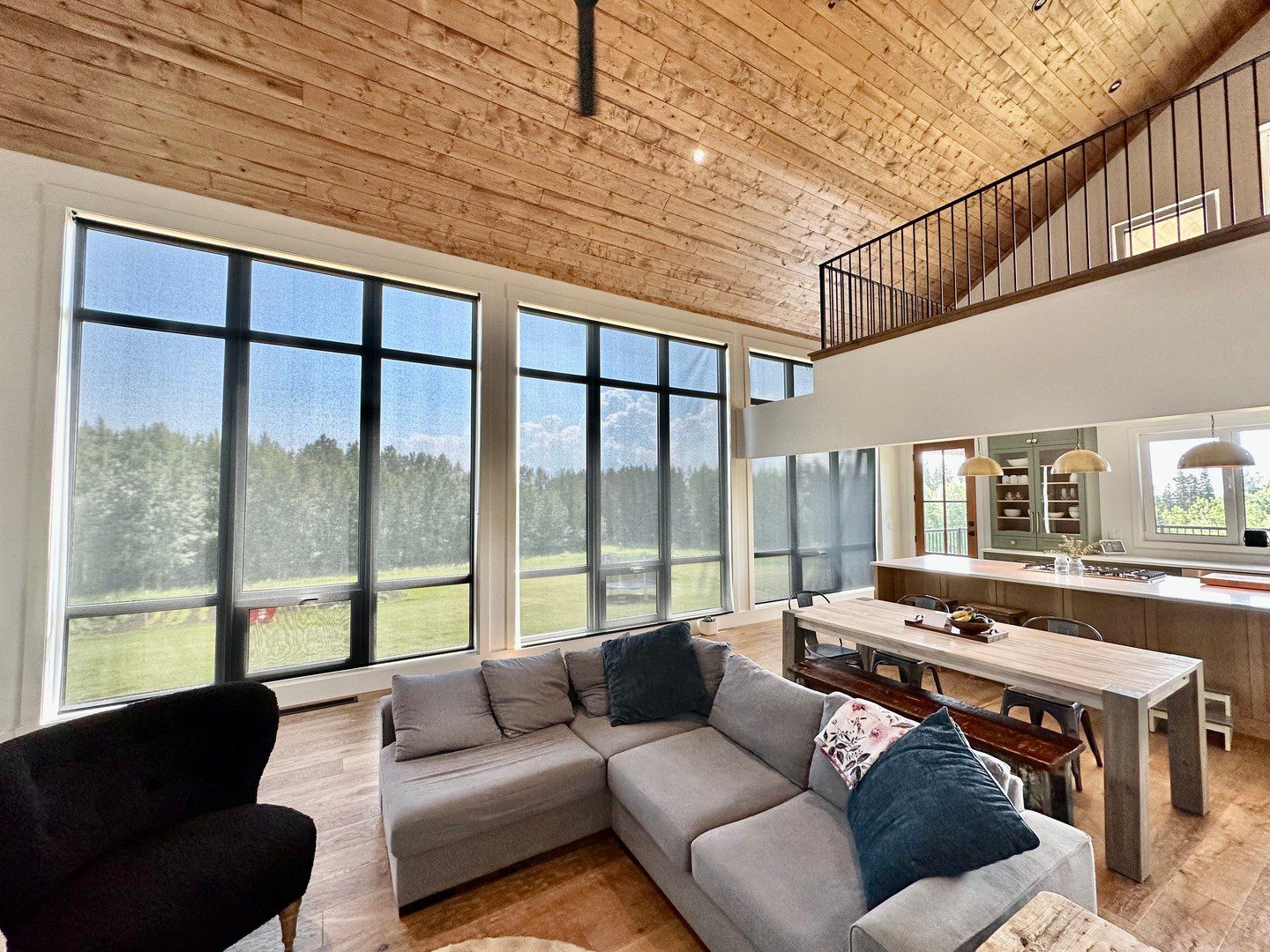
| Home Style | Ideal Option | Styling & Design Tips |
|---|---|---|
| Modern | Roller Shades | Opt for dark gray, charcoal, or matte black hardware with minimalist square cassettes. |
| Farmhouse | Cellular / Woven Blend | Choose warm off-whites, crisp linens, or soft neutral textures that frame nicely against painted trim molding. |
| Traditional | Cellular Shades | Layer inside-mount honeycomb shades beneath custom decorative drapery, valances, or cornices. |
| Craftsman | Roller Shades | Select natural screen textures or warm earthy tones that complement rich stained wood trim and window casings. |
| Contemporary | Dual / Zebra Solar Shades | Feature crisp geometric lines with alternating sheer and solid light-control fabric bands. |
Local Considerations for Grande Prairie and Northern Alberta
Operating window treatments in Northern Alberta comes with environmental demands that off-the-shelf products struggle to meet.
☀️ Summer (Extended Daylight)
Challenge: 18+ hours of direct daylight and intense UV exposure.
Impact: Excessive room heat gain and accelerated fading of hardwood and furniture.
Recommended Solution: Solar Roller Shades (blocks up to 97% of UV rays while preserving view-through).
❄️ Winter (Deep Freeze)
Challenge: Ambient outdoor temperatures reaching -30°C and cold glass radiation.
Impact: Persistent room drafts, furnace strain, and interior glass frost build-up.
Recommended Solution: Double-Cell Honeycomb Shades (creates an insulating air pocket to cut heating bills).
1. Extreme Winter Frost & Cold Conduction
When ambient winter temperatures dip below -30°C, untreated glass turns ice-cold. Radiation heat transfer pulls warmth directly from your body toward the cold glass when you sit near a window.
The Local Fix: Double-cell cellular shades provide a crucial buffer. By covering basement and north-facing bedroom windows with blackout honeycomb fabric, you create a dead-air space that stops frost build-up on interior trim and reduces furnace runtime.
2. Long Summer Daylight (18+ Hours)
During June and July in Grande Prairie, the sun rises before 5:00 AM and sets after 10:00 PM. Standard unlined window blinds allow early morning sunlight to flood bedrooms, throwing off sleep schedules.
The Local Fix: Blackout roller or cellular shades are essential for shift workers and young families. Choosing motorized blackout options with side tracks ensures complete room darkening, blocking early daylight so you can sleep on your own schedule.
3. Intense UV Exposure & Interior Fading
Northern Alberta’s low solar angles during spring and high summer sun reflection off winter snow produce high UV exposure year-round. This radiation gradually fades hardwood floors, leather furniture, and artwork.
The Local Fix: Solar roller shades act like sunglasses for your home. Selecting a 3% to 5% openness factor filters out 95%–97% of damaging UV rays while preserving your view of the outdoors.
Common Mistakes When Choosing Window Coverings
Even high-quality window treatments can underperform if chosen without considering key functional details.
Mistake 1: Ignoring Inside Depth Requirements
Mounting shades inside the window frame creates a clean, architectural finish. However, inside mounts require a minimum frame depth (typically 1.5 to 3 inches) to accommodate the mounting brackets and cassette headrail.
If your windows have narrow jambs, crank handles, or alarm sensors, an inside-mounted shade will stick out past the trim. Always check deep-depth clearance before ordering inside mounts.
Mistake 2: Buying Low-Grade Products for Large Windows
Spanning wide window openings (over 72 inches) with off-the-shelf shades often leads to bowed headrails and uneven fabric rolling over time.
Custom window treatments feature reinforced aluminum tubes and geared roller mechanisms designed to hold heavy fabrics without sagging or binding.
Mistake 3: Overlooking Cord Safety Standards
Canadian window covering regulations restrict the use of accessible long cords to prevent child and pet strangling hazards.
Choosing corded options for homes with young children or pets is no longer compliant. Instead, opt for certified cordless push-pull systems or motorized controls.
How to Measure Your Windows (Step-by-Step)
Accurate measurements are critical for a seamless fit. Follow these steps using a steel tape measure (avoid soft fabric measuring tapes, which can stretch).


| Dimension | Where to Measure | Value to Record | Why It Matters |
|---|---|---|---|
| Width (W) | Top (W1), Middle (W2), and Bottom (W3) | SMALLEST measurement | Prevents fabric from binding or rubbing against frame variations. |
| Height (H) | Left (H1), Center (H2), and Right (H3) | LONGEST measurement | Guarantees full coverage down to the bottom sill without light gaps. |
| Depth | From glass pane to outer edge of casing trim | Exact clear depth | Confirms clearance for inside mounting without crank or handle obstruction. |
For Inside Mount (Sits inside the trim frame)
Measure Width: Measure the inside opening at the top, middle, and bottom. Record the narrowest measurement down to the nearest 1/8th of an inch. (The factory makes necessary deductions so the shade doesn’t rub).
Measure Height: Measure from the inside top jamb down to the sill at three locations (left, center, right). Record the longest measurement.
Check Depth: Measure from the glass pane outward to the front edge of the trim to ensure you meet the minimum depth requirement for flush mounting.
For Outside Mount (Covers the trim or wall surface)
Determine Coverage: Decide how far beyond the trim frame you want the fabric to overlap. (We recommend adding at least 2 inches of overlap per side to minimize light gaps).
Measure Width: Measure the flat wall or trim surface from your desired left edge to your right edge.
Measure Height: Measure from the top mounting location down to the bottom sill (or floor), adding 2 to 4 inches above the trim to anchor the mounting brackets securely into studs.
When You Should Choose Both (Mixing Products in One Home)
You don’t need to install the exact same window treatment in every room of your house. In fact, matching window treatments to room function yields better comfort and efficiency.
The Hybrid Whole-Home Strategy
Street-Facing Windows: Use shades with a uniform white backing—such as roller shades with white street-side linings or standard cellular shades—to maintain clean, consistent curb appeal from the driveway.
Open-Concept Great Rooms: Use roller shades in kitchen and dining areas for easy cleaning and stain resistance, while choosing cellular shades in attached sitting areas to control noise levels and eliminate drafts.
Bedrooms & Nurseries: Stick with blackout cellular shades to ensure deep sleep and thermal comfort through cold winters and bright summer nights.
Questions to Ask Before Buying Custom Window Coverings
Before investing in custom window treatments, ask these practical questions during your consultation:
What is the product’s R-value and SHGC rating? Ask for exact thermal performance metrics if you are trying to cut heating or cooling costs.
Is the fabric anti-static or dust-resistant? This helps determine how much ongoing maintenance the shades will require over time.
How does the motorization warranty work? Ensure motor, remote, and power supply components carry an explicit multi-year warranty.
What are the deductions for inside mounts? Confirm how much light gap will remain along the sides of the fabric once installed.
Are these shades repairable locally if a cord snaps or mechanism binds? Ask if replacement parts and service are available in your region.
Why Professional Installation Matters
While DIY ordering might seem like a way to save money, custom window treatments require exact measurements and level installation to work reliably.
Leveling Irregular Windows: Few window frames are perfectly square. Professional installers use shims, precise leveling tools, and tension adjustments to ensure shades raise and lower straight without telescoping to one side.
Concealed Hardware Anchoring: Modern energy-efficient windows often feature specialized vinyl, wood, or aluminum jambs. Professionals anchor brackets into heavy structural framing behind trim surfaces, preventing shades from pulling free.
Guaranteed Fitment: When an expert handles the measuring and installation, the fit is fully guaranteed. If a measurement is off by an eighth of an inch, the supplier covers the remeasure and remanufacture—taking the risk off your hands.
To explore options in person, speak with a local specialist at Sheer Illusions to arrange an in-home consultation and view fabric samples directly under your home’s natural lighting.