
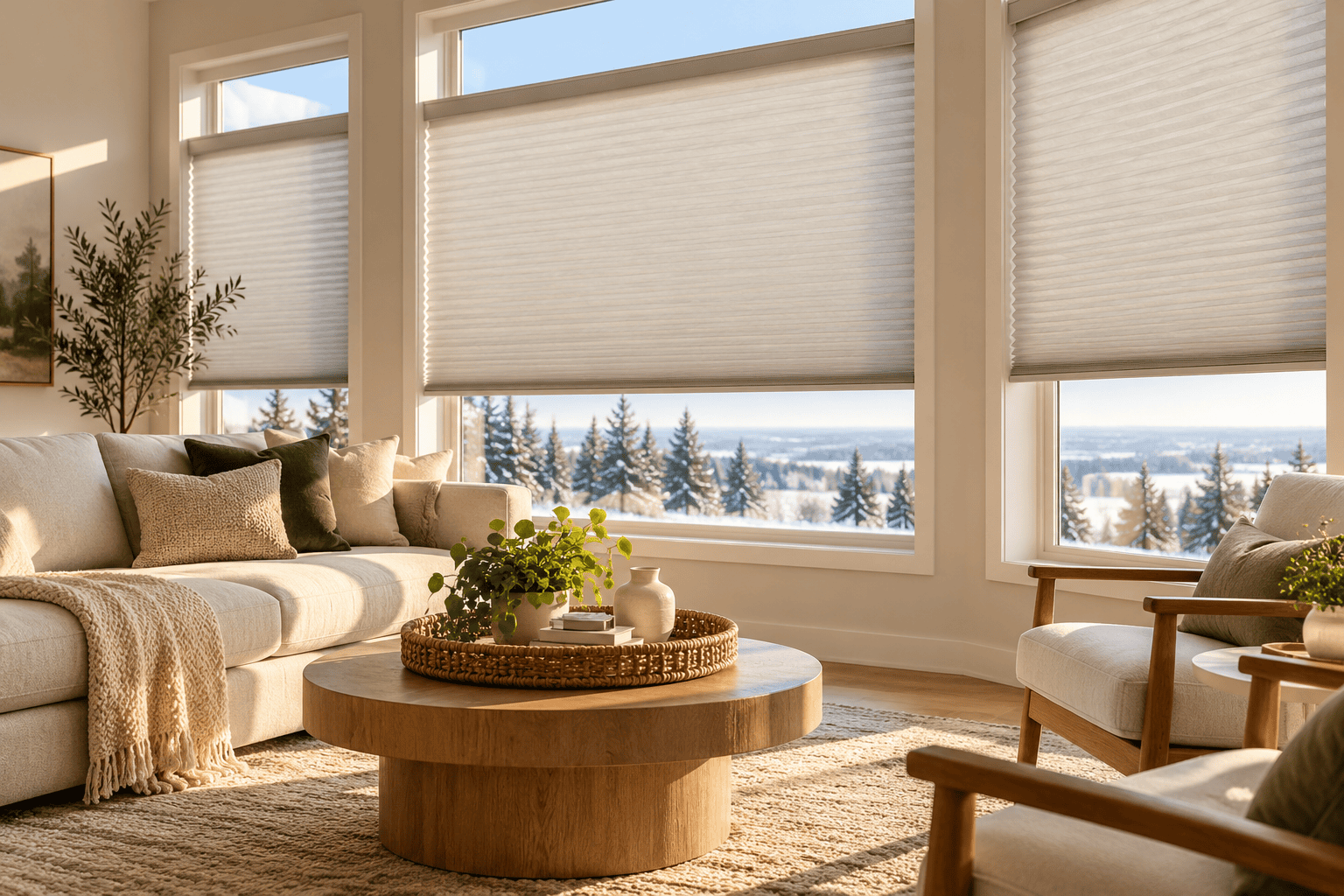
When winter arrives in Grande Prairie, keeping your home warm and comfortable becomes a priority. With freezing temperatures, cold winds and long heating seasons, even well-insulated homes can experience heat loss around their windows.
While most homeowners think about insulation, furnaces and energy-efficient windows, there’s another feature worth considering: your window coverings.
The right blinds or shades can help reduce heat transfer through your windows, keep rooms more comfortable and potentially lower heating and cooling costs. They can also provide privacy, control sunlight and complement your home’s interior.
But not all blinds offer the same insulating benefits.
From honeycomb cellular shades to lined drapery, some window coverings are specifically designed to improve comfort and energy efficiency.
So, which are the best energy-efficient blinds for Grande Prairie homes? Let’s look at the options, how they work and what to consider before making your choice.
Why Energy-Efficient Window Coverings Matter in Grande Prairie
Windows are essential for natural light, fresh air and outdoor views. However, they’re also one of the areas where homes can lose considerable heat.
According to Natural Resources Canada, windows, doors and skylights can account for up to 35% of a home’s total heat loss.
Even modern double- or triple-pane windows don’t provide the same level of insulation as a properly insulated exterior wall.
During Grande Prairie’s colder months, this can contribute to:
Rooms feeling cooler near large windows.
Cold glass surfaces and uncomfortable drafts.
Increased demand on your home’s heating system.
Temperature differences between rooms.
Higher energy consumption during extended cold spells.
Energy-efficient window coverings add another layer between your indoor living space and the glass.
Depending on their construction and fit, they can help slow heat transfer, reduce the sensation of cold near windows and improve overall comfort.
Window coverings won’t fix leaking window seals or replace proper insulation, but they can be a practical addition to a home’s existing energy-efficiency measures.
1. Cellular Shades: One of the Best Choices for Insulation
Best for: Bedrooms, living rooms, large windows and homeowners prioritizing energy efficiency.
If reducing heat loss is one of your main concerns, cellular shades should be near the top of your list.
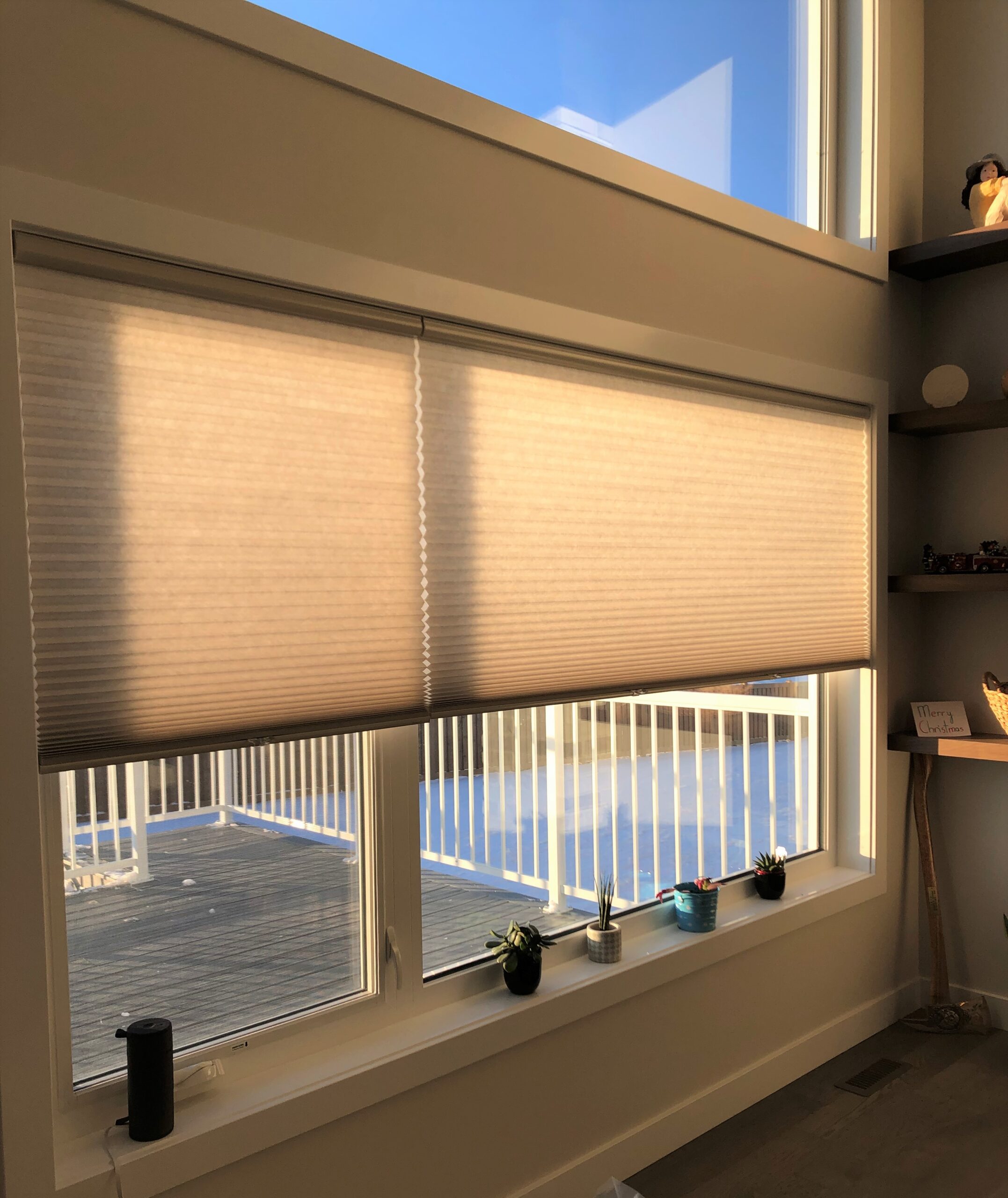
Also called honeycomb shades, these window coverings are designed with pleated fabric that forms small air pockets when viewed from the side.
These pockets trap air and help slow the movement of heat through the window area.
Unlike standard blinds, which have open spaces between individual slats, cellular shades create a more continuous insulating layer when lowered.
Why Are Cellular Shades Energy-Efficient?
Their unique construction offers several advantages:
Insulating air pockets: The honeycomb structure creates pockets of air that help reduce heat transfer.
Improved winter comfort: Properly fitted shades can reduce the amount of heat escaping through the window area.
Summer benefits: Cellular shades can also help limit unwanted solar heat gain during warmer weather.
Light and privacy options: Choose light-filtering fabrics for living areas or room-darkening options for bedrooms.
Natural Resources Canada confirms that window coverings can help reduce heat loss during the heating season. Cellular shades are particularly worth considering because their honeycomb construction creates insulating air pockets that slow heat transfer. For Grande Prairie homeowners dealing with long, cold winters, choosing properly fitted cellular shades can be a practical way to improve indoor comfort.
Actual savings depend on your windows, climate, selected shade and how you operate it.
Single-Cell vs. Double-Cell Shades
Not all cellular shades are constructed the same way. Two common options are single-cell and double-cell designs, each offering different levels of insulation and comfort.
Single-Cell Cellular Shades
One layer of insulating air pockets for everyday comfort.
- ✓ Feature one layer of honeycomb-shaped air pockets.
- ✓ Help reduce heat transfer through windows.
- ✓ Offer a lightweight, streamlined appearance.
- ✓ A practical choice for everyday light control and insulation.
Double-Cell Cellular Shades
Two layers of insulating air pockets for potentially greater thermal performance.
- ✓ Feature two layers of honeycomb-shaped air pockets.
- ✓ Create additional insulating spaces to help reduce heat loss.
- ✓ Can provide better thermal performance in certain applications.
- ✓ Worth considering for rooms with large windows or colder areas of the home.
Which Is Better for Grande Prairie Homes?
For homeowners looking to improve comfort during Alberta's cold winters, both options are worth considering. Double-cell shades may provide additional insulation, but the fabric, cell size and installation also influence their overall performance.
At Sheer Illusions, we carry cellular shades from trusted manufacturers, including Hunter Douglas, Alta and Graber. Our experienced team can help you compare fabrics, operating systems and insulating features to find the right fit for your windows.
2. Insulated Curtains and Drapery: Warmth With a Softer Look
Best for: Bedrooms, living rooms, large windows and homeowners who prefer fabric window treatments.
Custom curtains and drapes are another option worth considering when improving your home’s comfort.
Heavier fabrics, thermal linings and layered window treatments can help reduce heat loss, particularly when the curtains extend beyond the edges of the window.
Properly selected drapery creates an additional barrier between the room and the colder glass surface.
What Makes Drapery More Energy-Efficient?
The most useful features include:
Thermal or insulated linings
Lined drapes can provide more insulation than lightweight, unlined curtains. They also offer additional light control and privacy.
Full window coverage
Drapery that extends beyond the window frame can provide better coverage than panels that barely reach the edges.
Layered window treatments
Combining curtains with cellular shades or other blinds allows you to enjoy natural light during the day while adding extra coverage at night.
Heavier fabrics
Thicker fabrics can help improve comfort, although fabric weight alone doesn’t guarantee strong insulating performance.
Natural Resources Canada also notes that insulated drapes generally provide greater heating-season benefits than ordinary uninsulated drapes and blinds.
For homeowners who love the appearance of curtains but want more practical benefits, custom drapery can offer an attractive balance.
Sheer Illusions carries a selection of window coverings, including custom drapery options to complement your home’s interior.
3. Roller Shades: A Clean, Practical Option
Best for: Contemporary homes, bedrooms, home offices and spaces where simple operation is important.
Roller shades have become a popular choice for homeowners who prefer clean lines and an uncluttered appearance.
Although standard roller shades generally don’t provide the same insulating performance as honeycomb shades, certain fabrics and configurations can offer useful light and heat-control benefits.
Choosing Roller Shades for Energy Efficiency
The fabric you select makes a significant difference.
Light-filtering roller shades allow natural light into a room while softening glare.
Room-darkening and blackout fabrics provide greater light blockage and may offer additional thermal benefits, depending on their material and construction.
Some specialty fabrics are designed to manage solar heat, making them particularly useful for sunny windows.
For Grande Prairie homeowners, roller shades may be an appealing option when you want:
A modern, streamlined appearance.
Effective glare reduction.
Better privacy in bedrooms and living spaces.
Convenient manual or motorized operation.
A wide selection of fabrics and colours.
It’s important to remember that blackout fabric doesn’t automatically mean a shade is highly insulated. Light control and thermal performance are different characteristics.
If energy savings are your main goal, compare the specific fabric properties and installation options before deciding.
Explore our roller shades to see some of the available styles.
4. Interior Shutters: Adjustable Light and Privacy
Best for: Living rooms, kitchens and homeowners wanting a more permanent-looking window covering.
Interior shutters are another option for managing sunlight, privacy and comfort throughout the year.
Available in different materials and finishes, shutters feature adjustable louvers that allow you to change the amount of incoming light without fully opening the window covering.
When closed, their panels create an additional barrier over the glass.
However, shutters aren’t automatically as insulating as cellular shades. Their thermal performance depends on the material, construction, fit and gaps around the frame.
Benefits Beyond Energy Efficiency
Shutters are especially appealing to homeowners who want window coverings that provide:
Adjustable privacy and sunlight.
A classic appearance that complements many interiors.
Durable materials designed for long-term use.
Convenient maintenance.
Custom sizing for different window shapes.
Shutters can also be an attractive choice for rooms where you’d rather avoid hanging fabric panels.
At Sheer Illusions, we offer interior shutters in a variety of styles and finishes.
5. Motorized Shades: Better Control Throughout the Day
Energy efficiency isn’t only about which window covering you choose. How and when you use it also matters.
In winter, sunlight entering through your windows can provide natural warmth during the day. Once the sun goes down, closing insulating shades helps reduce heat loss.
Motorized window coverings make these adjustments more convenient.
Depending on the product and operating system, motorized shades may allow you to:
Open shades in the morning to enjoy natural daylight.
Close shades automatically in the evening.
Adjust multiple window coverings together.
Operate tall or difficult-to-reach windows.
Create schedules that match your daily routine.
For example, south-facing windows may benefit from being uncovered during sunny winter afternoons. At night, closing cellular shades can help maintain indoor comfort.
Motorization doesn’t make an ordinary shade more insulating by itself. Instead, it can help you use the window covering more consistently and effectively.
Sheer Illusions carries motorized options from leading manufacturers, including Hunter Douglas, Alta and Graber, with features varying by product.
Which Energy-Efficient Window Coverings Are Best?
Different products offer different advantages. Here’s a quick comparison to help narrow your choices.
| Window covering | Main advantage | Best suited for |
|---|---|---|
| Cellular shades | Insulating honeycomb construction | Cold-weather comfort |
| Insulated drapery | Layered fabric coverage | Bedrooms and living rooms |
| Roller shades | Light and solar control options | Modern interiors |
| Interior shutters | Adjustable louvers and durable design | Living areas and kitchens |
| Motorized insulating shades | Convenient scheduled operation | Large or hard-to-reach windows |
Our recommendation: If insulation is your main priority, start by comparing cellular shades. If you want warmth along with a softer appearance, consider lined drapery or layering curtains over insulating shades.
The best choice ultimately depends on your windows, room requirements, decorating preferences and budget.
How to Get the Most From Your Window Coverings in Winter
Even the most energy-efficient blinds won’t perform as well if they’re poorly fitted or rarely used.
A few simple habits can help you make the most of your investment.
Open Shades During Sunny Winter Days
Sunlight can contribute free heat to your home, particularly through south-facing windows.
Opening window coverings during sunny periods allows that warmth indoors.
Of course, the amount of benefit depends on your home’s window orientation and glazing.
Close Your Shades When the Sun Goes Down
Once sunlight is no longer providing useful warmth, closing insulating shades and drapery can help reduce heat loss through the window area.
This can be particularly helpful in bedrooms and living rooms with large windows.
Choose the Right Fit
Gaps along the sides and edges of a window covering can reduce insulating performance.
Custom-measured shades can help improve coverage, especially when installed with suitable mounting options.
Watch for Window Condensation
Insulating window coverings can make the glass behind them colder, which sometimes increases condensation during winter.
If moisture collects on your windows, maintain appropriate indoor humidity, allow air circulation when needed and address any existing window problems.
Don't Ignore Drafts
If cold air is entering around your window frames, blinds alone won’t solve the problem.
Weatherstripping, caulking or window repairs may be necessary before you can fully benefit from improved window coverings.
Choosing the Right Blinds for Each Room
You don’t necessarily need the same window coverings throughout your entire home.
In fact, selecting products according to each room’s purpose often makes more sense.
Living Rooms
Cellular shades or layered drapery can provide insulation while allowing flexible light control. Light-filtering fabrics are worth considering if you enjoy bright living spaces.
Bedrooms
Room-darkening cellular shades offer a combination of insulation, privacy and reduced incoming light.
For additional coverage, consider pairing shades with lined curtains.
Kitchens and Bathrooms
Moisture resistance and easy cleaning are important considerations. Depending on the window location, faux wood blinds, shutters or suitable roller shade materials may be more practical than fabric treatments.
Large Windows and Patio Doors
Large glass areas may benefit from carefully selected cellular shades, lined drapery or other custom treatments.
The window size, opening mechanism and available mounting space will influence which products work best.
Frequently Asked Questions About Energy-Efficient Blinds
Find answers to common questions about insulating window coverings, cellular shades and keeping your Grande Prairie home comfortable
What type of blinds provides the best insulation?
Cellular or honeycomb shades are generally among the strongest insulating choices because their air pockets help reduce heat transfer. Double-cell constructions and close-fitting installations may offer additional benefits.
Do energy-efficient blinds really help lower heating bills?
They can. Insulating window coverings help reduce heat loss, which may decrease the demand on your heating system. However, actual savings depend on your windows, climate, home insulation and how consistently the coverings are used.
Are cellular shades good for Alberta winters?
Yes. Cellular shades are well suited to cold climates because their honeycomb construction helps slow heat transfer through the window area. They can be particularly useful during Grande Prairie's extended heating season.
Are blackout blinds the same as insulated blinds?
No. Blackout refers to how effectively a window covering blocks visible light. Insulation refers to its ability to reduce heat transfer. Some products offer both features, but one doesn't guarantee the other.
Should blinds be open or closed during winter?
Open suitable shades when direct sunlight can help warm your home, then close insulating window coverings when the sun goes down. Adjust this approach based on comfort, privacy and condensation.
Can new blinds replace old, drafty windows?
No. Window coverings can improve comfort and reduce some heat transfer, but they won't repair air leaks, damaged seals or poorly insulated window frames.
Ready to make your home more comfortable?
Request your free estimate or visit our Grande Prairie showroom to explore energy-efficient blinds and shades.
Sheer Illusions
9908 100 Avenue, Grande Prairie, Alberta
(780) 532-1001
Please contact us to arrange a showroom visit so our team can be available to assist you.